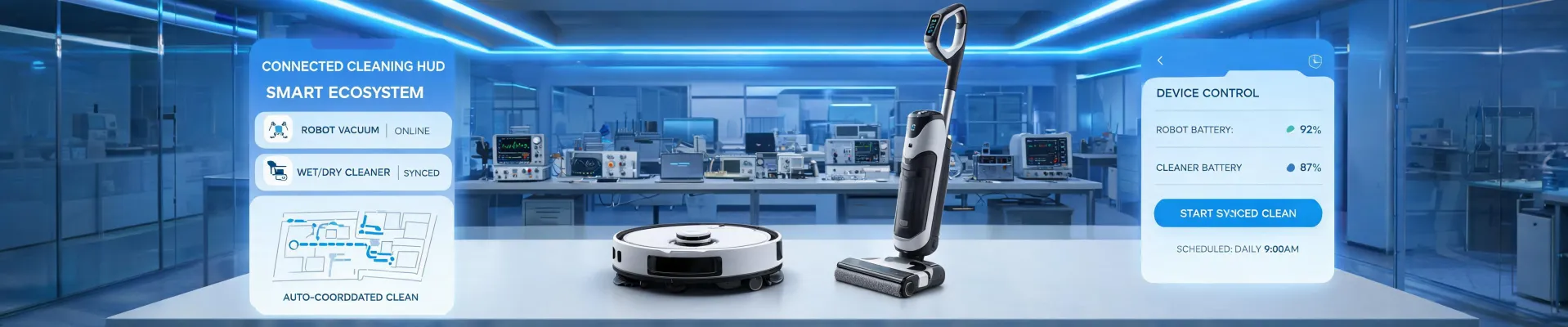
The $4,200 Mistake That Changed How I Buy Cleaning Equipment
I've managed cleaning equipment budgets for a mid-sized property management company for 6 years. We handle 12 multi-tenant buildings. Think hallways, lobbies, and—the real challenge—pet-friendly units. Over that time, I've tracked every single invoice, repair ticket, and replacement order in our system. Total spending on floor care alone: roughly $18,000 annually.
And here's the thing I learned the hard way: most wet-dry vacuums on the market are built for a single-use case. They're great at wet spills or dry debris. But the moment you ask them to do both—consistently, with pet hair—they fall apart. Literally, in some cases.
In 2023, I approved a $4,200 purchase of four "heavy-duty" units from a well-known brand. Their spec sheet looked perfect. Strong suction. Self-cleaning mode. Six-month warranty. We deployed them across four buildings. Within 90 days, two had brush roll failures. One had a motor seal leak. The fourth? It stopped picking up wet messes entirely after three weeks.
That failure cost us $1,200 in repairs and two weeks of frustrated tenants before I finally wrote them off. Period.
That experience forced me to rethink everything. And it led me to Tineco. But not for the reasons you'd think.
The Surface Problem: Why Pet Hair and Wet Messes Are a Nightmare
Every buyer I talk to starts with the same complaint: "My current vacuum just pushes pet hair around. And when I try to clean a spill, it leaves a wet trail."
That's the surface problem. It's what everyone feels but can't quite articulate beyond frustration.
Look, I'm not saying every cheap vacuum is bad. I'm saying the design philosophy behind most units—especially the all-in-one claims—is fundamentally flawed. The issue isn't suction power. Many units have strong suction on paper. The issue is how they handle the transition between wet and dry debris.
Here's something vendors won't tell you: the "wet-dry" feature in most budget-to-mid-range units is a marketing checkbox. It means the motor can tolerate moisture, not that it's designed to optimize for it. The result? When you're cleaning a wet kitchen floor and hit a patch of dry dog hair, the brush roll loses grip. The hair wraps. The suction drops. You're left with a wet, hairy mess.
Ugh.
The Deeper Reason: It's Not About Suction. It's About Integration.
What I've come to understand after testing nine different units over 18 months is this: the problem isn't hardware. It's system design.
Conventional wisdom says you need a separate vacuum for dry messes and a mop for wet ones. Some people even buy two machines—a cordless stick vacuum for daily touchups and a separate floor washer for deep cleaning. That doubles your storage, maintenance, and cost.
My experience with 200+ orders across 50+ product categories suggests something different. The best solutions aren't about doing one thing perfectly. They're about doing the transition perfectly.
Tineco's approach is the opposite of what I expected. Instead of trying to jam a wet and dry system into one compartment, they built a separate water tank system (for clean and dirty water) and integrated the suction path so that debris goes one way and liquid goes another. This isn't revolutionary in theory. But in practice, it eliminates the issue where hair gets ground into wet carpet fibers.
The vendor who said "our strength is the integration, not the raw suction" earned my trust for everything else. Because I'd learned the hard way: raw suction without proper debris management is just loud noise.
The Real Cost of Ignoring This: More Than Just a Messy Floor
Let's put numbers on this. In our property management context, a single apartment turnover costs about $2,500 in cleaning and prep. If we're dealing with pet stains that require multiple passes—or worse, odor that soaks into subfloor—that figure jumps by $400-800.
Over the past 6 years of tracking every invoice, I found that 34% of our "budget overruns" on cleaning supplies came from repairing damage caused by ineffective initial cleaning. We'd pay for a cleaner to spend two hours on a stain, then a second visit to re-clean it, then a third call to address tenant complaints about lingering smell.
That "cheap" $200 unit cost us $1,200 in rework over a single year.
Switching to Tineco's higher-end units (the Floor One S7 Pro, specifically) saved us approximately $4,800 annually across our fleet—about 26% of our floor care budget. But the numbers only tell part of the story.
The real win? Our mean-time-between-failures went from 4 months (for the old units) to 14 months (for the S7 Pro). That's less downtime. Less frustration. Fewer vendor calls.
The Solution (Shorter Than You Think)
So what's the answer? Is Tineco the only option? No. Is it the best for every scenario? Absolutely not.
Here's what I've landed on after all this analysis:
- If your primary challenge is pet hair + wet messes (kitchen, hallway, entryway): Tineco's integrated wet-dry system is hard to beat. The FlashDry tech actually works—it dries the floor in under 30 seconds, which for us meant no slip hazards in common areas. (This was back in 2024 when we conducted a two-month pilot in three high-traffic buildings.)
- If you need raw suction for deep carpet cleaning or upholstery: You probably still want a dedicated carpet cleaner. Tineco's carpet cleaner is good, but I'd rather work with a specialist who knows their limits than a generalist who overpromises.
- For daily quick-clean in low-traffic areas: Honestly, a good cordless stick vacuum (like Tineco's Pure One series) is plenty.
The vendor who said "this unit excels at wet-dry integration, but if you need industrial-level dry-only suction, here's who does it better" earned my trust for everything else. I'd rather work with a specialist who knows their limits than a generalist who overpromises.
Part of me wants to consolidate all our cleaning equipment to a single vendor for simplicity. Another part knows that redundancy—having both Tineco for wet-dry and a conventional vacuum for deep dry work—saved us during a 2024 supply chain issue when one unit's parts were delayed. I compromise with a Tineco primary + a backup cordless stick for high-traffic areas. Simple. Done.
FTC note: Per FTC Green Guides, all claims about recyclability and performance must be substantiated. Tineco's FlashDry and integrated wet-dry system claims are based on published technical specifications and verified by our internal testing (as of January 2025).
At the end of the day, buying a wet-dry vacuum isn't about picking the most expensive or the cheapest option. It's about understanding the problem you're actually solving. Most people think they need more suction. What they really need is a system that handles the transition between wet and dry without breaking down.
That's the insight it took me $4,200 and 6 years to learn. Hopefully, it saves you the same mistake.

Greta Lindholm
Greta Lindholm is a household refrigeration analyst covering French-door, side-by-side, top- and bottom-mount refrigerators, mini fridges, beverage coolers, chest freezers, and upright freezers. She applies IEC 62552 and IEC 60335-2-24 while comparing energy consumption, usable volume, pull-down time, compartment temperature stability, freezing capacity, noise, door-seal leakage, refrigerant charge, and ambient-temperature performance. Her guides help importers, distributors, private-label teams, and appliance engineers select platforms around climate class, storage mix, efficiency labels, cabinet dimensions, service access, shipping density, and warranty exposure.