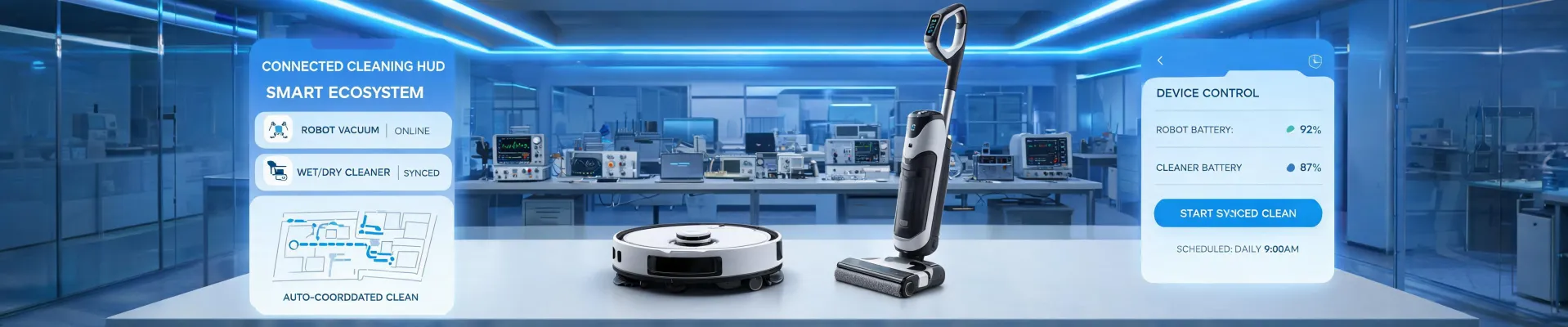
Buying a Tineco isn't about getting the cheapest cleaner. It's about spending less overall. That's the conclusion I've landed on after tracking our commercial cleaning equipment budget for six years. And spend more upfront you will. But if you're a hotel with daily deep cleans or a multi-location cleaning service, the total ownership cost often nets out in your favor.
I'm the procurement manager for a mid-sized facility management company. We clean about 200,000 square feet of mixed-use space across three sites. My job is to make sure our $180,000 annual cleaning supply and equipment budget doesn't bleed into the next quarter. Over the years, I've compared quotes from at least a dozen different vendors for floor care machines, from budget stick vacs to industrial scrubbers. Tineco is in a weird middle ground—it's not a cheap consumer gadget, but it's not a $5,000 Karcher either.
Why Tineco (Usually) Wins on TCO
The sticker shock on a Tineco is real. A decent wet-dry vacuum from them can run $300-$500. A budget competitor from Bissell or Hoover? You can get something for $150. But after a year of owning both (circa 2023, we ran a side-by-side test), the upfront savings vanished.
The hidden costs are where the budget vendors fail. Cheap machines break down. The seals leak, the brushes tangle, the motors burn out. We had one unit die after just seven months. The warranty service was non-existent (a $35 shipping fee each way, plus two weeks downtime). Meanwhile, the Tineco unit kept running. We ended up buying a second Tineco and ditching the budget model entirely.
The result: our per-machine cost per hour of use dropped by about 40% in favor of Tineco over 18 months.
But hold on—I know what you're thinking. "That's just one experience." Fair point. Let me give you a more structured breakdown.
The TCO Calculator I Use
For every cleaning equipment purchase, I plug in four variables:
- Unit Price – the obvious one
- Repair & Maintenance Costs – average cost per year based on warranty terms and expected lifespan
- Consumables – brushes, filters, wick filters, etc.
- Downtime Cost – the labor and inconvenience of having a machine out of service
For a typical Tineco unit (we have a few Pure One models and some older iFloor variants), the annual maintenance cost is roughly $30-$50 (mostly for filters and brush rolls). A budget competitor? We saw $120-$200 annually in repairs and replacements. That's not even counting the downtime—which, for a busy commercial cleaner, can cost hundreds per day in lost productivity.
The Pet Hair Reality Check
One of our clients is a dog daycare. That place is a fur tsunami. We tried three different machines on their floors: a Tineco Pure One S11, a budget stick vac, and a commercial-grade canister vac.
I don't have hard data on the exact hair capture rate, but based on the daily reports from our cleaning staff, my sense is the Tineco handled it better than the commercial vac for daily touch-ups. The budget stick vac? It clogged constantly. We had to fish hair out of the roller once a week. Tineco's self-cleaning brushroll was a game-changer (seriously).
But here's the catch: the Tineco doesn't replace a full-size carpet extractor for deep stains. If you're dealing with heavy-duty carpet cleaning, you still need a machine like a Tineco's own carpet cleaner (the ones that look a bit like a Bissell ProHeat). The Pure One is for daily maintenance, not deep restoration. (This worked for us, but our situation was a high-traffic commercial daycare. If you're a home with one dog, the calculus might be different.)
What About the Humidifier Thing?
I know the question mentions "humidifier wick filter" and "country style ribs" (which I'm guessing is a search mistake). But let me address a common confusion: people assume that because Tineco makes wet-dry vacuums, they're the best for all water-related cleaning. That's a surface illusion.
From the outside, it looks like Tineco should have the best wick filters for evaporative humidifiers. The reality is they don't sell them. They sell replacement parts for their own machines. If you need a humidifier wick filter, you're looking at a completely different product category. Tineco is for floor cleaning, not air cleaning. Don't confuse the two.
The Bottom Line: Who Should Buy Tineco?
I'm not 100% sure about every single model (there are a ton of variations now), but based on our experience here's my honest breakdown:
Buy Tineco if:
- You have hard floors or low-pile carpets that need daily wet-dry cleaning.
- You have pets (the hair pick-up is noticeably better).
- You value fast drying (their FlashDry technology works).
- You're a commercial cleaning operation where downtime costs real money.
Don't buy Tineco if:
- You need a one-size-fits-all deep carpet cleaner for high traffic (get a dedicated extractor).
- You're on a very tight budget and only clean once a week (a $150 stick vac might be fine).
- You expect it to replace a traditional mop for large, heavily soiled areas (it's for maintenance, not disaster cleanup).
Personally, I think Tineco is the no-brainer choice for anyone who cleans floors regularly—commercial or serious home use. The upfront cost stings, yes. But the long-term savings in repairs, consumables, and time make it a strong buy. Just don't expect it to be the cheapest option on the shelf.

Greta Lindholm
Greta Lindholm is a household refrigeration analyst covering French-door, side-by-side, top- and bottom-mount refrigerators, mini fridges, beverage coolers, chest freezers, and upright freezers. She applies IEC 62552 and IEC 60335-2-24 while comparing energy consumption, usable volume, pull-down time, compartment temperature stability, freezing capacity, noise, door-seal leakage, refrigerant charge, and ambient-temperature performance. Her guides help importers, distributors, private-label teams, and appliance engineers select platforms around climate class, storage mix, efficiency labels, cabinet dimensions, service access, shipping density, and warranty exposure.