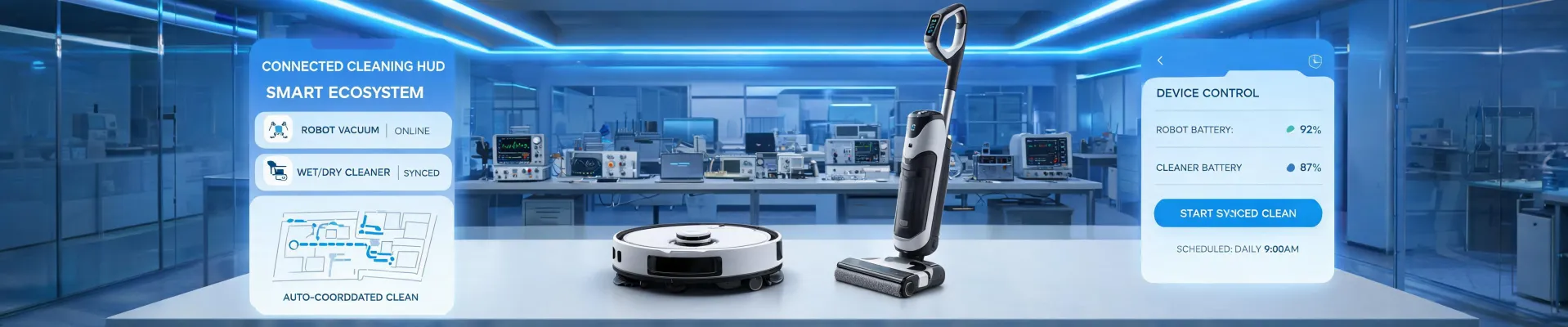
What was best practice in 2020 may not be what saves you in 2025. The fundamentals of cleaning haven't changed; you still need to remove dry soil, handle wet messes, and wash anything that holds odors. But the execution has been transformed. When a client calls me with a rental turnover, pet accident, or same-day showing, I don't ask which cleaner is best in general. I ask which machine can solve the worst mess in the next 24 hours.
In my role coordinating emergency cleanouts and appliance replacements, I've handled more than 200 rush situations in seven years. In March 2024, I had a landlord call at 7 pm because a tenant moved out and the property inspection was scheduled 36 hours later. The home had wet accidents on tile, dog hair across two carpeted bedrooms, and a pile of washable covers that smelled even after a regular cycle. No single product fixed all three. That's why the scenario matters more than the model name.
Start by sorting your emergency into a branch
A universal cleaning machine would be nice, but I don't think one exists. Not because the brands are lazy; because hard floors, carpet, and fabric have opposite needs. Wet handling on tile requires water and suction. Dry pet hair on carpet requires agitation and airflow. Soft goods require water immersion that no floor machine can give you.
Here's the branch list I use when I have to recommend something fast:
- Scenario A: mostly hard floors with spills, mud, or pet accidents that need wet cleaning.
- Scenario B: carpets and upholstery with dry pet hair and dander.
- Scenario C: the odor or residue is in dog beds, cushion covers, or bedding.
- Scenario D: you want it to start while you're not there, and you're asking if a smart switch is enough.
If you skip this sorting, you will buy a machine that wins one argument and fails another.
Scenario A: Hard floors and wet messes
If your emergency is muddy boot prints, pet urine, spilled laundry liquid, or wet paw trails, a tineco vacuum mop s7 search usually leads in the right direction. The FLOOR ONE S7 is the wet-dry vacuum mop that takes water in one tank and dirty water in another.
Before you buy, understand what the machine actually is. A vacuum mop is not a dry stick vacuum. According to Tineco's official product info, the iLoop sensor detects dirt on a hard floor and adjusts suction or water flow. That makes one pass useful when you have a thousand-square-foot tile floor and a dog that just came in from rain. I've seen it turn what used to be a 45-minute sweep-plus-mop job into about 15 minutes.
For smaller hard-floor areas, the GO H2O Sense is the model I tell people to check if they don't need the full FLOOR ONE feature set. I read Tineco GO H2O Sense cordless floor washer reviews from the same angle every time: is the reviewer comparing it to a wet-dry vacuum mop or to a bucket and mop? If it's the second comparison, it looks good. If it's the first, complaints about water tank size or accessories start to show up.
The honest boundary: I've only used this category in homes with 50 to 80 percent hard flooring. If you have wall-to-wall carpet, a floor washer should not be your only machine.
Scenario B: Carpet and fabric with dry pet hair
If your main issue is dog hair woven into the stair runner, couch cushions, or a wool rug, the online search that actually matches is top rated cordless stick vacuum for pet hair. This category is different from the Tineco S7 vacuum mop, even though the names look similar.
Tineco also makes a dry stick vacuum line, and the model I keep recommending has a motorized brushroll with anti-tangle or self-cleaning claims depending on the version. Don't let the model number confuse you: FLOOR ONE S7 is for wet hard floors. The PURE ONE S7 is a cordless stick vacuum for dry pickup. When I first bought one for my crew, I made the classic specification mistake: I saw S7 in two places and assumed one machine could do both. It couldn't. Wet-dry floor washers are not designed to spend their lives acting like dry vacuums, and using them that way can create odor from leftover moisture in the system.
For pet hair on low-pile carpet and fabric, you need a brushroll that can break up the hair and a filter that doesn't clog every few minutes. Cordless means nothing if the runtime disappears after the first high-speed pass.
The old advice was to sweep or vacuum before mopping. That still applies in Scenario B. If you know your house has carpet, start there.
Scenario C: The smell is in washable fabric
Here's the part people miss when they search only for floor cleaning. After the hard floor is clean, the emergency often shifts to the dog bed that absorbed the accident or the duvet cover that traps dander.
This is when a Samsung washing machine 9kg enters the conversation. A 9kg class washer is not a fancy feature by itself, but in a real situation it means enough capacity for one large load of bedding or a set of cushion covers without running three cycles. Samsung's own capacity ratings are based on dry laundry weight, so a heavy wet blanket is not really a 9kg load. Still, the size range is useful when the alternative is the same fabric sitting in a bin waiting for a trip to the laundromat.
In the March 2024 job, we used the Tineco floor washer on tile, a cordless stick vacuum on carpets, and a Samsung 9kg washing machine for the dog mattress covers while the last rooms were being cleaned. Without the washer, the inspection would have smelled like pet odor no matter how clean the floor looked.
Manufacturer care labels matter more than any sanitize claim. Some fabrics don't tolerate high heat, and a sanitize cycle is not a license to ignore the label.
Scenario D: The smart home follow-up
A question that keeps appearing in the same search sessions is does smart switch use wifi. The short answer: many smart switches do use Wi-Fi, but some use Zigbee, Thread, or a hub. If your actual goal is to start a floor washer or vacuum by app, don't rely on a switch.
Most Wi-Fi-enabled Tineco and Samsung appliances need their own connection. The Samsung washer, if it has remote start, uses SmartThings rather than a generic smart switch. And if you were thinking about Samsung Smart Switch, the app used to move data from an old phone to a new one, that's a separate thing. It transfers data over Wi-Fi or a cable; it doesn't control the washing machine.
My experience with smart switches is mostly on the cleanout side: I've seen a charger connected to a smart plug cut power at 2 am and leave a machine dead by morning. That's not a good reason to skip the last hour of charging. So no, I don't usually install a smart switch for an appliance that was designed to stay on its own dock.
How to find your branch
If you're still not sure, do this 30-second test. Picture the mess that made you search in the first place.
- If it was wet on a hard floor, read the wet-dry floor washer details.
- If it was hair on a couch or rug, compare stick vacuums for pet hair.
- If it was a smell coming from something you can fold, look at the washing machine.
- If it was purely I want to start cleaning while at the office, learn the app ecosystem before shopping.
My experience is based on about 200 mid-sized residential cleanouts. If you're dealing with wall-to-wall high-pile carpet, commercial extraction, or a multi-unit building, this advice may not apply. That's where I'd also say: don't hold me to the exact model lineup. Tineco and Samsung change model names faster than I can keep track. I suspect that's why people search by review fragments, and I don't blame them.
The final test isn't whether the product is highly rated. It's whether the product solves the specific emergency that happens in your home at 7 pm on a Sunday. A Tineco floor washer, a cordless pet-hair stick vacuum, and a Samsung 9kg washer all have a place. They just rarely belong in the same branch.

Greta Lindholm
Greta Lindholm is a household refrigeration analyst covering French-door, side-by-side, top- and bottom-mount refrigerators, mini fridges, beverage coolers, chest freezers, and upright freezers. She applies IEC 62552 and IEC 60335-2-24 while comparing energy consumption, usable volume, pull-down time, compartment temperature stability, freezing capacity, noise, door-seal leakage, refrigerant charge, and ambient-temperature performance. Her guides help importers, distributors, private-label teams, and appliance engineers select platforms around climate class, storage mix, efficiency labels, cabinet dimensions, service access, shipping density, and warranty exposure.