-
My Position: The Lowest Price Is Almost Never the Lowest Cost
-
Argument 1: Cleaning Equipment — Where 'Budget' Gets Expensive Fast
-
Argument 2: The 'Premium' Tankless RO System Was Actually $340 Cheaper Over 3 Years
-
Argument 3: Smart Lighting — Compatibility Costs Are Real and Invisible
-
The Counterintuitive One: Even Food Safety Is a TCO Decision
-
Answering the Obvious Objection
My Position: The Lowest Price Is Almost Never the Lowest Cost
I'm the procurement manager at a 200-person company. I've managed our facilities and equipment budget — roughly $180,000 annually — for 8 years. I've negotiated with 40+ vendors and documented every order in our cost tracking system since 2019.
Here's the conclusion I've been forced to accept:
In roughly 60% of purchase decisions I've tracked, the option with the lowest upfront price turned out to be the most expensive choice within 24 months.
Not 100%. Not always. But often enough that I stopped pretending it's a coin flip.
I didn't arrive at this by intuition. I built a spreadsheet after getting burned on hidden fees twice. It tracks every invoice, reorder, warranty claim, and replacement cycle. Six years of data later, the pattern is clear enough that I no longer need to argue about it internally.
Argument 1: Cleaning Equipment — Where 'Budget' Gets Expensive Fast
I bought three different budget floor washers in 2022 and 2023. All three looked like smart buys. All three were sitting in a storage closet — or heading to e-waste — within 14 months.
The first one cost $189. Battery degraded by month 8. Replacement battery: $65. Second unit: leaking seal at month 6, and the 'warranty coverage' required $35 in shipping each time. Third unit actually performed fine — until the motor failed at month 11, just outside the warranty window.
I added up everything we spent on those three units. Sticker prices, replacement parts, shipping fees for warranty claims, and the time my team spent troubleshooting. Total: just over $700 for approximately 14 months of inconsistent cleaning.
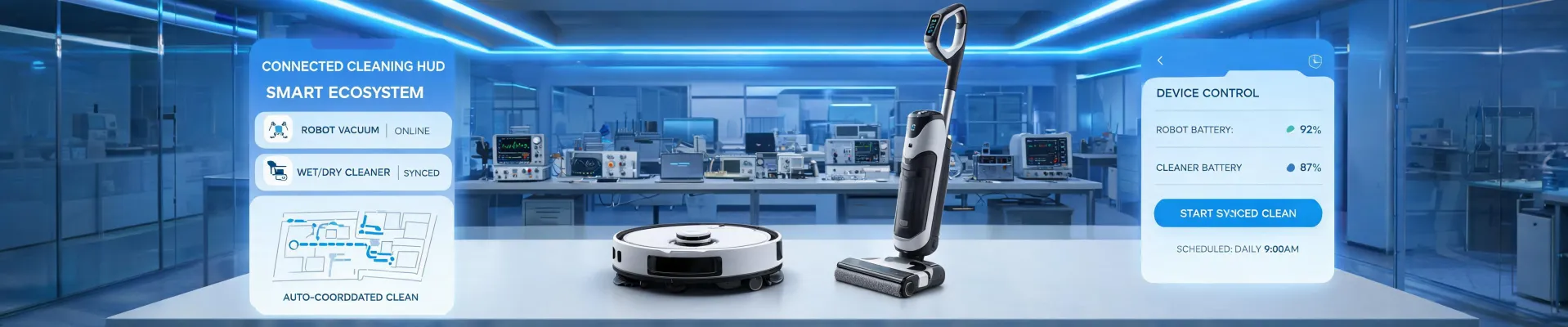
Then we bought a single Tineco Floor One S5 for $449. Two years of consistent performance. Pet hair pickup was noticeably better — our office has three dogs on premises, and anyone who's tried to get golden retriever hair out of low-pile carpet knows the difference between 'claimed pet hair removal' and actual performance. Filter replacements cost us maybe $25 every six months.
When I compared those two spending lines side by side — same square footage, same usage pattern, same team — I finally understood why I'd been thinking about this backwards. The Tineco sticker price looked 2.4x higher than the cheapest option. The total cost of ownership was actually lower. By a lot.
We've since added two Tineco handheld vacuums for daily touch-ups. I've read dozens of Tineco handheld vacuum reviews at this point, and most of them focus on suction specs and runtime benchmarks. None of them track what I actually care about: cost per month of actual, uninterrupted use. Same pattern. The unit price is only about 35% of what you'll actually spend over 3 years.
Better than the alternative. Barely.
Argument 2: The 'Premium' Tankless RO System Was Actually $340 Cheaper Over 3 Years
Last year I spec'd a tankless reverse osmosis system for refrigerator installation in our office kitchen. Two quotes came back:
- Tank-style RO: $320 installed
- Tankless RO: $510 installed
The upside was avoiding stagnant water reservoirs and producing faster flow. The risk was spending $190 more upfront. I kept asking myself: is faster water worth potentially wasting $190 if the system underperformed within the first year?
Then I filled in the maintenance lines.
The tank-style unit required $60–$90/year in sanitation supplies and quarterly tank flushes. Output slowed to a trickle after the first two glasses, which meant people filled up bottles and walked away — wasting water while waiting. The tankless unit had no reservoir to sanitize, flushed in under 2 seconds per glass, and drew roughly 15% less energy because it only runs on demand.
Over 3 years, that $190 premium turned into a $340 savings — before counting the labor hours saved on tank maintenance.
We went with tankless.
I should add that we'd had a tank-style unit in a previous office for four years. So I already knew the maintenance burden. I just hadn't put a dollar figure on it until this quote comparison forced me to.
Argument 3: Smart Lighting — Compatibility Costs Are Real and Invisible
When we upgraded conference room lighting in Q2 2024, we had two paths: Philips smart lighting (the Hue ecosystem, ~$38/bulb) or generic smart bulbs at $12 less per unit.
Eighteen fixtures. The 'cheap' path saved us $216 on the shelf.
Then: 4 bulbs stopped responding within 8 months. 2 flickered intermittently until we traced it to a fixture wiring incompatibility — $280 electrician visit we didn't budget for. App integration with our existing Nest system never worked reliably; people just stopped using the scheduling feature altogether.
We replaced the entire setup with Philips six months later. The Philips system has been running for 10 months without a single dropout. Scheduling works. Our AV team stopped getting complaints.
The $216 'savings' turned into roughly $560 spent on bulbs + $280 on an electrician + an unknown number of hours from our IT team troubleshooting connectivity. Versus $684 for the Philips system that would have been right the first time.
Did we save money? On paper, briefly. Was it worth the hassle? Not remotely.
The Counterintuitive One: Even Food Safety Is a TCO Decision
This sounds off-topic. Stay with me.
Two years ago, someone in our office kept asking 'how long can eggs be out of the refrigerator' and nobody had a straight answer. I looked it up and put the answer on a label inside the fridge door:
Per FDA food safety guidelines, perishable items — including eggs — should not be kept at room temperature for more than 2 hours. (If ambient temperature exceeds 90°F, that drops to 1 hour.)
But for our kitchen, a $12 digital thermometer was the more important purchase. We placed it on the middle shelf in June 2023. Within a week, the data showed something we'd been missing: our old refrigerator was running 4°F above safe range on the lower shelves. Not enough to trigger a thermometer alarm. Enough to accelerate spoilage across produce and dairy.
Pre-thermometer, monthly food waste averaged $80–$100. Post-thermometer — after adjusting the temperature and monitoring it — waste dropped to roughly $55/month. The $12 thermometer also revealed that our previous fridge was consistently warmer than its display indicated.
A $12 device cut $25–$45/month in avoidable waste. Payback period: under 2 weeks.
Oh, and the egg question? The answer matters less than the habit of actually checking. Cheap decisions scale downward too.
Answering the Obvious Objection
I know someone is going to say: 'Every situation is different. Sometimes the cheap option makes sense.'
They're right. Sometimes it does.
If you need a single-purpose tool for a two-week project where durability is irrelevant — buy the cheap one. If your timeline is short enough that the equipment won't live past the warranty period anyway — buy the cheap one.
But for systems you'll live with for 2+ years? Appliances, equipment, infrastructure? The pattern holds across every category I've tracked. Our procurement policy now requires a 3-year TCO estimate on anything over $250 because I got tired of watching the same mistake play out with different product names.
The cheapest option is a starting point, not a strategy.
Here's what I actually do now: I build a 3-year cost model before I look at the sticker price. I map maintenance costs, consumables, replacement cycles, support hours, and end-of-life disposal. That last one bites more than people budget for. Then I compare the totals.
Sometimes the mid-tier option wins. Sometimes the premium option wins. Rarely — genuinely rarely — does the absolute cheapest option come out ahead after all the lines are filled in.
Not a lecture. Just the arithmetic.

Greta Lindholm
Greta Lindholm is a household refrigeration analyst covering French-door, side-by-side, top- and bottom-mount refrigerators, mini fridges, beverage coolers, chest freezers, and upright freezers. She applies IEC 62552 and IEC 60335-2-24 while comparing energy consumption, usable volume, pull-down time, compartment temperature stability, freezing capacity, noise, door-seal leakage, refrigerant charge, and ambient-temperature performance. Her guides help importers, distributors, private-label teams, and appliance engineers select platforms around climate class, storage mix, efficiency labels, cabinet dimensions, service access, shipping density, and warranty exposure.