-
What is the Tineco Floor One S5 wet-dry cordless vacuum?
-
What do Tineco vacuum symbols mean?
-
Do I need filtered water or a special solution for the S5?
-
Can I use a half gallon water dispenser for the Tineco clean water tank?
-
How does a top load washer work, and why is it in this article?
-
Is the Tineco Floor One S5 wet-dry cordless vacuum worth the cost for business use?
-
Do I have to run the self-clean cycle after every shift?
Before the FAQ: I buy cleaning equipment for a 40-person facilities-services company and manage a roughly $220,000 annual budget for supplies and machines. I have held that purchasing role since 2019. When I first started comparing cordless floor cleaners, I assumed the lowest ticket price was the smartest buy. That mistake cost me about $750 in extra labor and repairs on a different machine. So I'd rather explain the real ownership questions than repeat the marketing sheet.
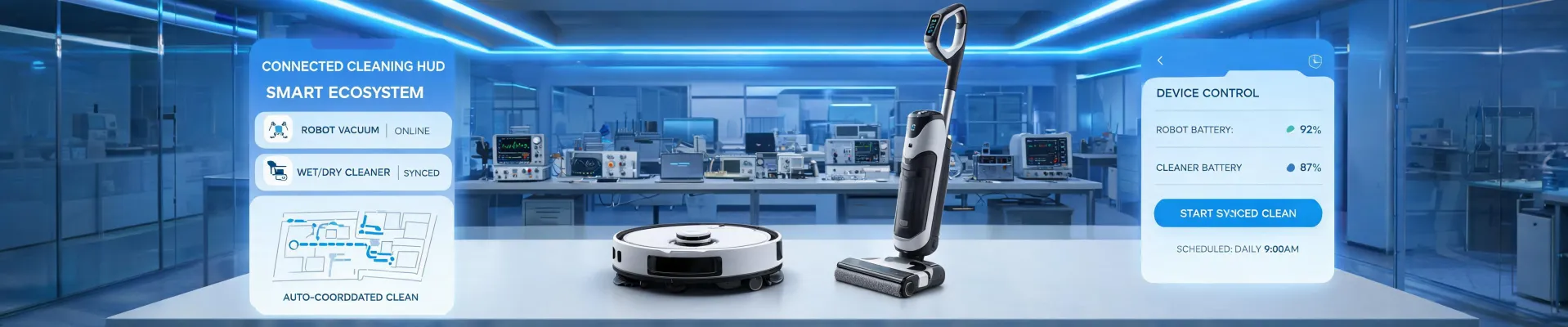
What is the Tineco Floor One S5 wet-dry cordless vacuum?
The S5 is a battery-powered hard-floor cleaner. It dispenses water and cleaning solution onto a roller, scrubs, and then uses suction to pull the liquid into a separate dirty-water tank. It isn't a shop vacuum for a flooded basement, and it isn't a replacement for a large commercial extractor. It is, in the way I describe it to our field staff, a powered mop that also collects the dirty water in the same pass.
My initial mental model was wrong. When I first read wet-dry cordless vacuum, I assumed it could handle a bucket of standing water. It can manage normal wet spills, but not an overflow from a broken supply line. Knowing that distinction keeps purchase expectations aligned with reality.
What do Tineco vacuum symbols mean?
The fastest way to avoid a repair bill is to learn the display symbols before you need them. On the Floor One S5 units we bought in late 2024, the main icons are a battery symbol, a clean-water tank symbol, a dirty-water tank symbol, a Wi-Fi connection symbol, and the self-clean button. When one of those icons flashes, the voice prompt usually says what is needed, if the voice prompt is turned on.
A few Tineco models also use a color ring as a cleanliness cue. On our machines, a red ring means dirt is being detected rather than a machine failure. Blue tends to mean the sensor considers the floor cleaner. But if you see a warning icon with a water tank on the display, stop and check the dirty-water tank before continuing. Ignoring that symbol is the closest I've come to creating an expensive motor problem. And don't hold me to the exact drawing on every newer model; the icons changed slightly across refreshes, so check the unit's manual as of January 2025 if you want the full list.
Do I need filtered water or a special solution for the S5?
You don't need expensive bottled water for regular cleaning. We use cold tap water in most sites and add the Tineco solution according to the label ratio. The two things I avoid are hot water and high-foam detergents. A foam-heavy household cleaner can confuse the dirty-water sensor and leave residue in the tank.
If your building has hard water, softened water is easier on the machine's water-path parts. We saw scale build-up on a float sensor at one site with hard water. The same machine at a site with a functioning water softener has needed no descaling after about a year. That brings me to a phrase people type into search boxes: Morton salt pellets for water softener. Those pellets go into the softener's brine tank, not into the Tineco or any other appliance that moves water around the floor. I added this warning because water softener salt is often stored near cleaning chemicals, and a busy janitorial closet is exactly where mix-ups happen.
Also, if a cleaning-fluid label says 'eco-friendly' with no evidence behind that word, ask the supplier for specifics. Per FTC Green Guides, environmental claims need substantiation. That is a purchasing standard, not a vacuum feature.
Can I use a half gallon water dispenser for the Tineco clean water tank?
Physically, you can fill the clean tank from any clean water dispenser. The better reason to keep one nearby is batch consistency. In our supply closet, I keep a half gallon water dispenser dedicated to the floor-cleaning area, fill it with cool water, and mix the cleaning solution according to the label. Then staff fill the tank to the MAX line and not beyond it.
A half gallon water dispenser is not a Tineco accessory, and I'm not pretending it is. It simply stops people from guessing. Before we standardized this, I found tanks overfilled because someone judged the water level by eye. Overfilled clean tanks create puddles and longer drying time. That hidden labor cost is part of total ownership.
How does a top load washer work, and why is it in this article?
A top load washer fills an outer tub with water, wets the clothes, mixes detergent through the load, uses an agitator or impeller to move the clothes, drains the soiled water, and spins the basket at high speed to remove extra moisture. It is a water-bath process.
A floor washer like the S5 does not soak the floor in a standing bath. It applies solution through a roller and removes the liquid with suction. The maintenance lesson, however, is the same. Hard water leaves scale in appliances that regularly see water, whether it is a washing machine, water heater, humidifier, or floor cleaner. That is why I pay attention to water softener maintenance even though the floor washer does not receive salt directly. If you already understand how scale forms in a top load washer, you are halfway to understanding why the S5 tanks should be kept clean and dry between uses.
Is the Tineco Floor One S5 wet-dry cordless vacuum worth the cost for business use?
When I ran our 2024 equipment comparison, I did not compare the S5 with a single named competitor. I compared total cost: machine price, battery life, cleaning speed, roller replacements, cleaning solution, staff training, and repairs. For our hard-floor sites, the S5 reduced the end-of-night cleaning routine enough that it paid for itself through saved labor in about 14 months. That is not universal. If your site is mostly carpet or wider than a warehouse aisle, you may need a bigger extraction machine.
Personally, I would not buy one for a large commercial facility as the only cleaning tool. I would put it on a shortlist for smaller hard-floor buildings, guest suites, or teams that need a fast follow-up clean. It also helps that employees can understand the user interface if they spend ten minutes on the symbols first.
Do I have to run the self-clean cycle after every shift?
On the units we operate, the display prompts a self-clean routine after a job. One night we were running late and I skipped it. That was a mistake. The dirty-water path stayed damp, and the roller developed an odor that took real effort to fix. I still kick myself because the instructions were not hidden.
Now the self-clean step is a checklist item in our cleaning schedule, not a memory test. If you own one of these, don't make the same choice. The cycle takes only a few minutes and prevents a bigger maintenance conversation with a client later.

Greta Lindholm
Greta Lindholm is a household refrigeration analyst covering French-door, side-by-side, top- and bottom-mount refrigerators, mini fridges, beverage coolers, chest freezers, and upright freezers. She applies IEC 62552 and IEC 60335-2-24 while comparing energy consumption, usable volume, pull-down time, compartment temperature stability, freezing capacity, noise, door-seal leakage, refrigerant charge, and ambient-temperature performance. Her guides help importers, distributors, private-label teams, and appliance engineers select platforms around climate class, storage mix, efficiency labels, cabinet dimensions, service access, shipping density, and warranty exposure.