-
Tineco Floor One S9 Pro Review: Is it actually worth the upgrade?
-
Tineco Go Hammerhead Review: Is it a replacement for the Floor One S9 Pro?
-
Should we buy an electronics vacuum cleaner for the office equipment?
-
Do we really need a Waterpik Water Flosser Pocket Pik in guest bathrooms?
-
How much is a new water softener, and why does it matter for floor cleaners?
-
Why does "one machine for everything" sound so tempting?
I've been handling appliance and cleaning-equipment orders for serviced apartments for 8 years. I've personally made (and documented) 14 significant mistakes, totaling roughly $11,000 in wasted budget. So the advice below isn't from a spec sheet. It's from a checklist I built after paying for my errors.
Before you read on, here's my boundary: I'm not a flooring expert, an appliance repair tech, or a plumber. I'm the guy who orders the gear and then finds out what breaks. These are the questions I hear the most.
Tineco Floor One S9 Pro Review: Is it actually worth the upgrade?
For our hard-floor units with pets and wet messes, yes. The wet/dry combination saves a step, and the FlashDry self-cleaning cycle has been the reason we no longer smell stale mop water in the supply closet. I won't quote spec sheets. The practical review is this: we put one in 12 units in March 2024, and the housekeeping team actually wanted to use it.
It handles pet hair well when you use the right brush roll. That's the part where I got burned. We didn't have a formal verification process for included accessories, so we ordered 10 units with the standard brush roll instead of the pet-hair one. Two weeks and $360 later, we have a pre-check list.
Is the S9 Pro a no-brainer for every property? Not even close. For high-turnover rentals with hard floors, pets, and the occasional spilled smoothie? It earns its place.
Tineco Go Hammerhead Review: Is it a replacement for the Floor One S9 Pro?
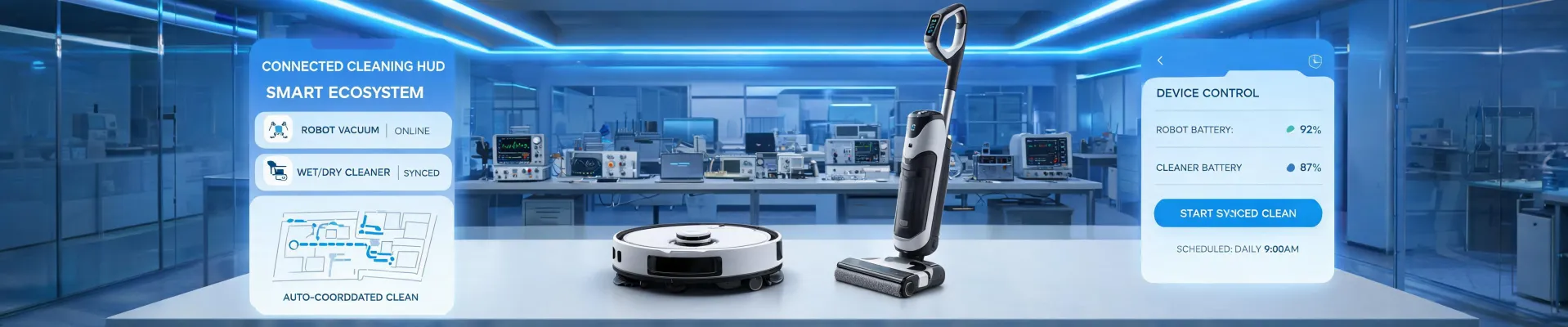
No. Don't buy one thinking it replaces the other. The Go Hammerhead is the machine we grab for a 10-minute pickup. It's lighter, easier to grab, and less intimidating for new staff. The Floor One S9 Pro is the one we use when a spill needs actual scrubbing.
We keep both. In March 2024, I nearly cut the Go Hammerhead from the budget to save $230. Good thing I didn't. The Floor One is overkill for daily crumbs and loose hair. The Go Hammerhead gets used daily. I don't know why that surprised me. Maybe because I kept thinking one machine should do everything. It doesn't.
Should we buy an electronics vacuum cleaner for the office equipment?
Yes, if you clean computers, routers, UPS units, or anything with circuit boards. But buy a proper electronics vacuum cleaner — one with low airflow and ESD-safe attachments. I once used a regular floor vac on a switch full of dust. It worked, kind of. It also made me nervous every second.
Honestly, I'm not sure if it damaged anything. I stopped doing it and bought a small cordless electronics vacuum. The surprise wasn't the cost; it was the difference. A decent one runs $30 to $80, and it saves you from either breaking something or paying someone to blow out equipment with compressed air. If you manage a building with a small IT closet, a $50 electronics vacuum is way better than the anxiety of a $400 service call.
Do we really need a Waterpik Water Flosser Pocket Pik in guest bathrooms?
Need? No. But if your units are at a price point where guests expect nice extras, it's a small touch that gets noticed. The Waterpik Water Flosser Pocket Pik is the cordless model I've bought for our two premium apartments.
I was skeptical. I thought a disposable floss pick would be fine. Then guests started asking for it by name, and we standardized on the Pocket Pik.
This gets into guest-amenity territory, which isn't my main expertise, so ask your front desk or property manager before ordering a dozen. For us, it's been a keeper. But it's not a selling point in a basic unit. It's a nice extra, not a necessity.
How much is a new water softener, and why does it matter for floor cleaners?
Good question, and it's connected. Hard water scales up the heating elements and tanks on a wet-dry vacuum faster than you'd expect. I didn't connect the dots until we went through two machines in one building.
A new water softener costs between $400 and $2,500 for the unit, plus $150 to $800 for professional installation. That's based on publicly listed prices at major home-improvement retailers in January 2025. For a typical 2-to-4-bedroom property, you're usually looking at a 32,000 or 40,000-grain system. I can't tell you how to size one — that's plumber territory. But the budget range gives you a starting point. If you're quoted $5,000 for a standard whole-home system, get a second opinion. Pricing is for general reference; verify current rates.
Why does "one machine for everything" sound so tempting?
Because it promises to simplify your life. But "everything" usually means "nothing well." I've learned to look for the supplier who has boundaries. The person who says "this isn't our strength — here's who does it better" is worth more than the one who claims to be the only brand you'll ever need.
The same logic applies inside the building. Use the right tool for the right job. Our Floor One S9 Pro handles wet floor maintenance. The Go Hammerhead handles quick pickups. A dedicated electronics vacuum handles sensitive gear. The water softener keeps hard water from killing the machines. It's not flashy. It's what works.

Greta Lindholm
Greta Lindholm is a household refrigeration analyst covering French-door, side-by-side, top- and bottom-mount refrigerators, mini fridges, beverage coolers, chest freezers, and upright freezers. She applies IEC 62552 and IEC 60335-2-24 while comparing energy consumption, usable volume, pull-down time, compartment temperature stability, freezing capacity, noise, door-seal leakage, refrigerant charge, and ambient-temperature performance. Her guides help importers, distributors, private-label teams, and appliance engineers select platforms around climate class, storage mix, efficiency labels, cabinet dimensions, service access, shipping density, and warranty exposure.