I'm the office administrator for a mid-sized property management firm—about 150 employees across two office towers. My job includes sourcing everything from paper towels to the industrial-grade floor scrubbers that keep our lobbies looking like showrooms. Roughly $200,000 a year goes through my desk, spread across a dozen vendors who handle cleaning supplies, equipment, and maintenance.
When I took over purchasing in 2020, I made a classic rookie mistake: I chased the lowest price on our main floor scrubber. It looked fine on paper. Good specs, decent reviews. The vendor promised delivery within three weeks. Three weeks.
It took nine.
And when it finally arrived, the battery—the vacuum battery, specifically—lasted maybe 45 minutes on a full charge. Our lobbies cover about 15,000 square feet combined. We needed twice that runtime. So there I was, explaining to my VP why the $3,000 "bargain" scrubber that was supposed to save money now needed an additional $800 battery upgrade and a second charging station.
That experience taught me something about purchasing I hadn't fully appreciated: the difference between price and cost—and why, in emergencies, paying for certainty isn't a luxury. It's a necessity.
The Surface Problem: Equipment That Doesn't Perform as Advertised
Most facility managers I talk to focus on the same thing: specs and price. How long does the battery last? How fast does it dry? Can it handle pet hair and deep stains? These are reasonable questions. They're also surface-level.
The deeper problem isn't what the equipment can do. It's what happens when it doesn't—and the cascading consequences that follow.
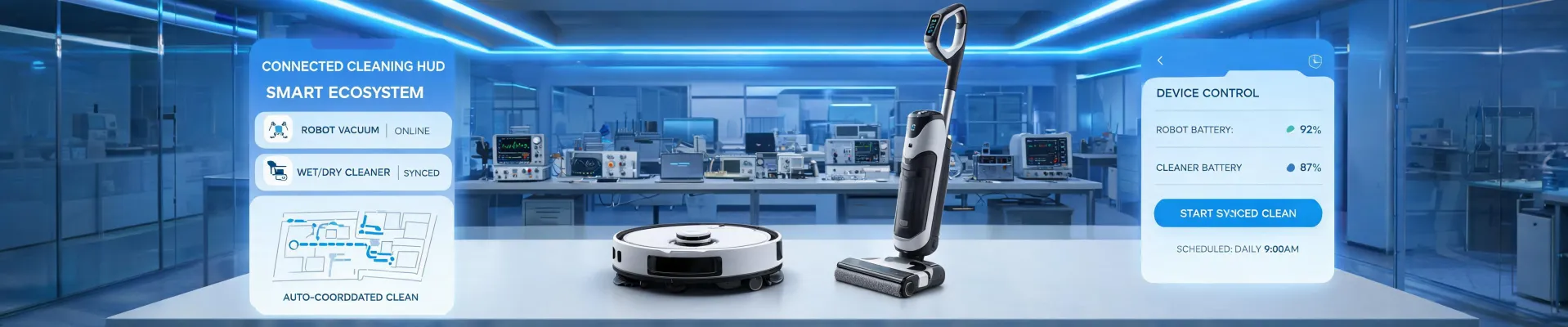
Let me give you a recent example. We needed a wet-dry vacuum mop—something like the Tineco series—for our ground floor. High foot traffic, daily spills from the café, muddy boots in winter. We found a budget model that claimed 30-minute runtime and "FlashDry" technology. The price was tempting: about 40% less than the mid-range options. People assume the lowest quote means the vendor is more efficient, but what they don't see is which costs are being hidden or deferred.
Ordered it in March 2024. The vendor said 7-10 business days. Fine. We planned a deep clean for the following weekend. Day 10 came. No delivery. Day 14. Still nothing. I called. They said "maybe next week." We had to postpone the clean, which upset the café manager—their pre-opening cleaning slot was now gone. The deeper cleaning I'd planned took a backseat.
When the machine finally arrived—on day 22, if I remember correctly—the battery wasn't fully charged. The manual claimed 45 minutes. In actual use, with the smart sensor detecting heavy dirt? Closer to 25. Not ideal, but workable? Barely. The real problem: it didn't dry the floor properly. The "FlashDry" feature was a joke—our lobby stayed damp for hours. A safety hazard. A liability.
Cue the complaints. The building manager. The cleaning supervisor. The receptionist who had to mop up wet footprints from visitors. I ended up returning it. The return process took another week. The vendor charged a 15% restocking fee. Oh, and the missed cleaning weekend? That cost us about $1,200 in overtime for the cleaning crew we'd already scheduled.
The surface problem was underperformance. The real problem was the cost of unpredictability.
The Hidden Cost: Why Delays and Unreliability Are Worse Than a Higher Price Tag
People think expensive vendors deliver better quality. Actually, vendors who deliver quality can charge more. The causation runs the other way. But the deeper issue isn't quality itself—it's certainty.
In my experience, the hidden costs of unreliable equipment or late delivery fall into three buckets:
- Operational downtime. When your floor cleaner is out of commission, you can't clean. That means a dirty lobby, groaning tenants, and a shoddy first impression. Every hour of downtime costs in reputation and actual cleaning hours.
- Internal friction. Every delayed delivery, every budget overrun, every complaint that lands on my desk damages my credibility with the teams I support. The VP of Operations doesn't care that the vendor was a week late. She cares that the cleaning schedule slipped. The café manager doesn't care about the battery specs. He cares that his floor was sticky for three days.
- Financial bleed. The restocking fee. The overtime. The expedited shipping for a replacement. The secondary upgrades you didn't budget for. These add up fast.
When we finally ordered the replacement—a mid-range Tineco model this time, which I'd read about in a handful of reviews (including a fairly detailed Tineco Go Pet 303 review that focused on battery life and drying speed)—the experience was night and day. The vendor quoted 5-7 business days. It arrived in 6. The battery lasted exactly as claimed: 35-40 minutes in heavy soil mode. The drying technology actually worked. Did it cost more? Yes. About $500 more than the "bargain" model. Was it worth it? In the long run, absolutely.
"The cost of the cheaper option wasn't $3,000. It was $3,000 plus $800 for the battery upgrade, plus $1,200 in overtime, plus $450 in restocking fees, plus the lost credibility. The real price was $5,450—and that's before accounting for the stress and time spent managing the mess."
I should add that this pattern isn't unique to floor scrubbers. It's true for almost every piece of equipment we purchase. The temptation is to compare sticker prices. The mistake is not considering what happens if it fails.
Why Paying for Certainty Makes Sense (Especially Under Pressure)
The assumption is that rush orders cost more because they're harder. The reality is they cost more because they're unpredictable and disrupt planned workflows. But there's another layer: in emergencies, the value of knowing something will arrive on time—or work as promised—is worth a premium.
In March 2024, we had a tenant event that required a deep clean of the common areas. The timeline was tight. I needed a reliable carpet cleaner delivered in three days. The regular vendor quoted $400 for a budget model (standard delivery, 7-10 days). No guarantee of arrival. Another vendor offered a premium model with guaranteed next-day delivery for $520. Which one did I choose?
The premium, of course. The $120 premium was effectively insurance against a $15,000 event being compromised by sticky carpets and dirty hallways. The question isn't whether the premium is worth it. It's whether the alternative is acceptable. In that case, it wasn't.
This is where the principle of "time certainty premium" kicks in. When you have a hard deadline—a cleaning schedule, a tenant move-in, a regulatory inspection—the certainty of delivery becomes more valuable than the savings from a lower price. Why pay extra for certainty? Because the cost of uncertainty is almost always higher than the premium you're paying.
To be fair, not every purchase requires this calculus. If I'm ordering a spare battery for a Tineco vacuum that won't be needed for three months, I'll take the budget option and wait. But for mission-critical equipment—the stuff that directly impacts the day-to-day operation of our facilities—I've learned to budget for reliability.
Practical Takeaways: How to Avoid the Hidden Costs
So what's the play here? How do you ensure you're not getting burned by the gap between price and total cost?
- Define what "mission-critical" means for your operation. Not every piece of equipment is equally important. Floor scrubbers and carpet cleaners? Usually mission-critical. A handheld mixer for the break room? Not so much. Prioritize your spending accordingly.
- Build in a buffer for delivery timelines. If the vendor says 7-10 days, plan for 14. If it arrives early, you're ahead. If it arrives late, you're not scrambling. This sounds simple, but it's the most common mistake I see: trusting vendor timelines without a contingency.
- Look beyond the initial price tag. Ask about battery life in real-world conditions. Ask about drying times. Read reviews—not just the star ratings but the detailed ones that describe actual use cases. If you're considering a Tineco Go Pet 303, don't just look at the specs. Find someone who's used it in a commercial setting and ask about runtime and drying.
- Budget for the premium when it matters. If you're facing a deadline—a tenant move-in, a health inspection, a seasonal deep clean—pay for the delivery guarantee. Budget upfront for the rush fee so you're not caught off guard. In my experience, $400 for guaranteed delivery is a bargain compared to the cost of missing the deadline.
- Keep a "spare" fund for replacements. Even with the best equipment, things break. Having a small reserve budget for emergency replacements prevents panic buying and ensures you don't settle for a subpar option under pressure.
Honestly, I'm not sure why some vendors consistently beat their quoted timelines while others consistently miss. My best guess is it comes down to internal buffer practices—the ones with real-time inventory systems and dedicated logistics teams are more reliable, but they also charge for that reliability. The budget vendors often operate on thinner margins and less predictable supply chains.
Fair enough. But as a buyer, I don't need to understand the vendor's operations. I need predictable outcomes. And that predictability is worth paying for.
I've never fully understood the pricing logic for rush fees. The premiums vary so wildly between vendors that I suspect it's more art than science. What I do know is this: every time I've saved money by choosing the cheaper, less reliable option, I've ended up spending more in the long run—in time, in reputation, and in the quiet frustration of explaining to my VP why the simple task of buying a cleaner turned into a two-month fiasco.
If there's one thing my 5 years of managing these relationships has taught me, it's this: cheap is expensive. Not always, not in every case, but often enough that I now budget for reliability first and price second. It's saved me headaches, saved my department money, and—most importantly—kept our lobbies clean and our tenants happy.
And that's the whole point, isn't it?

Greta Lindholm
Greta Lindholm is a household refrigeration analyst covering French-door, side-by-side, top- and bottom-mount refrigerators, mini fridges, beverage coolers, chest freezers, and upright freezers. She applies IEC 62552 and IEC 60335-2-24 while comparing energy consumption, usable volume, pull-down time, compartment temperature stability, freezing capacity, noise, door-seal leakage, refrigerant charge, and ambient-temperature performance. Her guides help importers, distributors, private-label teams, and appliance engineers select platforms around climate class, storage mix, efficiency labels, cabinet dimensions, service access, shipping density, and warranty exposure.