The Problem I Kept Having
When I first started taking floor cleaning seriously, I assumed the problem was the machines. I went shopping with the same logic I used for a new phone: buy the most powerful thing with the best ratings and enjoy it. Four years, seven devices, and roughly $2,400 later, I can tell you it's not that simple. The machines were mostly fine. My understanding of what I was buying was the actual problem.
I'm not a professional reviewer. I'm the person who buys things, learns the hard way, and keeps notes so my friends don't repeat my mistakes. My notes have caught 23 potential bad purchases in the past 18 months. I write down everything: product, price, date, what I assumed, and what actually happened. In that order.
The surface problem seemed simple: my kitchen and entryway floors never stayed clean. Pet hair re-formed in corners within hours of vacuuming. And any attempt at mopping left a sticky film that made me wonder why I'd tried at all. I blamed each machine in turn. But the real explanation only surfaced after I bought two genuinely good machines — the Tineco Floor One Switch S7 Pet and the Tineco Pure One S11 — and nearly returned both because I hadn't understood what they were.
What Was Actually Going Wrong
The four mistakes below all share one root cause: I never asked myself what kind of cleaning life I actually have. I bought for the home I imagined, not the home I live in.
Mistake #1: The Spec Sheet Trap
I shopped for vacuums the way people shop for sports cars. Suction watts, battery cells, charging speed — higher number wins. That's how I ended up with a first-generation cordless vacuum that looked powerful on paper and felt wrong in every room: it tipped forward, the bin dumped dust down my leg, and the brush tangled itself on the first strand of dog hair it met. On paper, excellent. At 7 a.m., it was a very expensive annoyance.
The Tineco Pure One S11 cordless vacuum taught me what I'd been ignoring: smart suction sensing. It detects fine dust and debris on the floor and adjusts power in real time. It saves battery on clean sections and goes full power where the dirt actually is. Sounds like a gimmick in the product description, maybe. But the first time the motor spooled up by itself over a patch of dust I hadn't noticed, I understood. The advertised runtime isn't the point. The point is how the machine spends the battery it has. What I mean is: a spec sheet doesn't tell you how a tool behaves in your actual morning.
Mistake #2: Wet-Dry vs. Dry-Only
I used to assume that any "cordless cleaner" was the same basic tool with a different battery. So when I got the Pure One S11, it seemed reasonable to use it on a spilled sparkling water. (It was not reasonable. Do not do this.) A dry-only stick vacuum has a filter designed for air and dust, not liquid. The filter caught most of it, but the machine made a sound that I can only describe as a low "why would you do this to me?" and I spent an hour disassembling and drying everything.
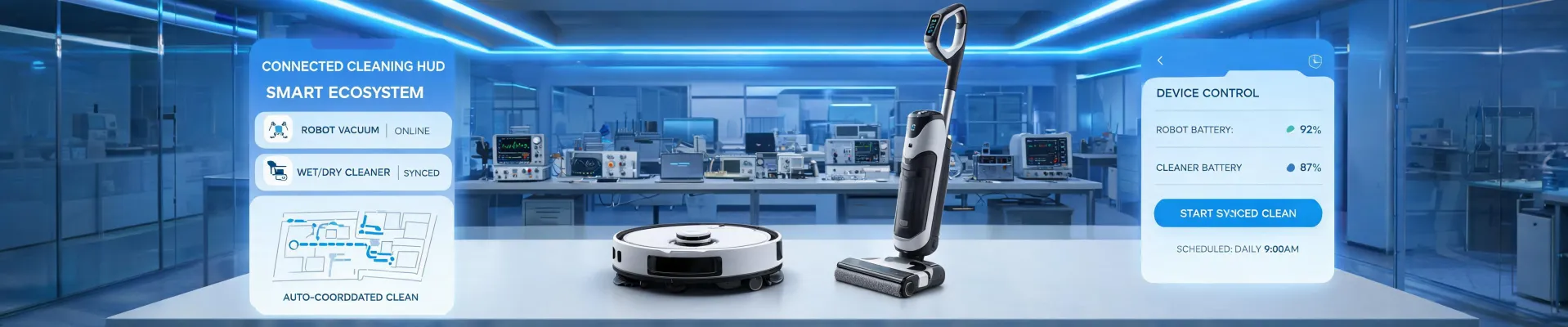
The Tineco Floor One Switch S7 Pet is a different category entirely. It's a wet-dry floor washer: two tanks, one for clean water and solution, one for dirty water. A brush roller scrubs the floor, and the suction pulls the dirty water into the tank. It's a floor washer that vacuums at the same time. Not a vacuum that hopes to wash.
And I nearly returned it. Why? Because it leaves the floor visibly wet for a while — which is what mopping is supposed to look like. But I had been dry-vacuuming so long that I took wetness as a sign of failure. What I mean is: I almost sent back a perfectly good floor washer because I'd forgotten that washing a floor involves water.
(The FlashDry is what sold me in the end. After the self-clean cycle, the machine pushes air through the brush housing, so the roller isn't left damp. That's the kind of detail that only matters once you've owned a wet-dry machine with a brush that stayed wet too long.)
Mistake #3: Maintenance Was the Real Price of Entry
Nobody told me that wet-dry vacuums need attention after they clean. Or maybe everyone told me and I wasn't listening. Honestly, I'm not sure which. My best guess is that people who love cleaning tools assume everyone else is also excited about maintenance, and I assumed maintenance was optional.
My $340 wet-dry floor washer — the one before Tineco — died because I never cleaned the brush roller. It sat damp inside the machine for weeks. After about a month, it smelled like a towel left in a bag and then asked to reconsider its life choices. I blamed the product. In reality, I had ignored every rule of wet-dry maintenance: dry the roller, empty the tank, rinse the filter.
The S7 Pet made the routine survivable. After a wet clean, I run the self-clean cycle. It rinses the brush and uses FlashDry to dry the brush housing. Then I empty the dirty tank. One minute. That one minute is the difference between a tool I use happily every week and a science experiment I eventually pay to have removed.
Mistake #4: Attachments Are Not Interchangeable
I used to think cordless vacuum attachments were an afterthought. All those plastic bits in the box — wasn't the real tool the motor? So I bought a $30 universal attachment kit, and it clicked onto the wand, and it looked right, and it was wrong.
The airflow channel didn't align with the Pure One S11's wand. The universal crevice tool lost pressure at the tip, so corners and baseboards took three or four passes. When I went back to the attachments that came in the Tineco box, the difference was immediate. It felt like the tool was doing the work instead of me negotiating with it.
If you search for cordless vacuum attachments, remember this: the fitting joint is only the first checkpoint. Test what you bought. If the universal tool takes more passes to reach the same result, it's not saving you money — it's costing you time and patience.
What It Cost (Money, Time, and One Water Flosser)
Here's the number that keeps me honest: $2,475, over four years, on cleaning equipment that didn't stick. The breakdown in my phone reads like an inventory of bad decisions:
- $780 — a cordless vacuum whose battery died after 14 months
- $340 — a wet-dry floor washer ruined by a brush I never dried
- $90 — universal attachments that clicked in but didn't truly fit
- $1,200 — a carpet-focused machine, bought while most of my home is hard floor
- $65 — a Pecham water flosser. Yes, that's next.
The Pecham water flosser has nothing to do with floors. It belongs in this story because it proves the same pattern: I bought it on sale, without checking whether it fit my actual habits. Reservoir size? Pressure range? Counter space? Didn't check any of it. It sat in a drawer for eleven months before I sold it. The flosser itself was fine. The buying decision was broken — same story as the vacuums, different aisle.
That same pattern produced one of my stranger research nights: I spent about 20 minutes asking a search engine "is there a heating element in a gas dryer?" I don't own a gas dryer. But for anyone who's here for exactly that question: gas dryers don't get their heat from a heating element the way electric dryers do. They use a gas burner. There's an electrically heated igniter that lights the burner — technically a heating element of sorts, but not the thing producing the dryer's heat. If someone tells you your gas dryer needs a "heating element," ask what they mean. The likely parts are a burner assembly, igniter, or thermal fuse. (This is just my Sunday-evening research, not professional repair advice. Sharing it as of early 2025.)
Back to floors. Total waste: $2,475. And the worst part isn't the money. It's the years of living with floors I could have fixed with the right tools, used for the right reasons.
The Fix That Finally Worked
You came for one thing, if the search terms are accurate: a Tineco review. So here's the short version of the fix, and the review, in the same breath.
- The Tineco Floor One Switch S7 Pet handles everything wet. Kitchen spills, bathroom floors, muddy paw prints. It washes and vacuums in one pass, the self-clean cycle with FlashDry dries the brush after every session, and I empty the dirty tank when it fills. Entire workflow: one minute after each use. Tineco Floor One Switch S7 Pet review, for real: worth it — if you accept that it's a floor washer, not a vacuum you drag around hoping.
- The Tineco Pure One S11 handles daily dry duty. It's light, it's smart about suction, and with the original attachments it does corners, stairs, sofas, and car interiors. Tineco Pure One S11 cordless vacuum review in one line: a genuinely good dry stick vacuum, and a reminder that "dry" and "wet" are different jobs.
- Attachments matter more than the spec sheet does. If you're looking at cordless vacuum attachments, start with the brand's own set. Universal kits are not automatically worse — but they're not automatically equal either. Test, compare, and keep what actually performs.
One more thing, and it's the reason I'm telling you all this:
Small spaces deserve good tools too.
I live in a small apartment. My cleaning corner is about half a meter wide. For years I acted like a "small customer" — someone who shouldn't ask for much, shouldn't spend on quality, should make do with the cheapest option. That self-image cost me $2,475. The floor doesn't care about square footage. Two good machines, used correctly, did more for my 65 square meters than seven "wait-and-see" purchases ever did.
When I had a filter question about the S7 Pet, I emailed Tineco support and got a useful answer within a day. They treated my one-unit household like a real customer. That's not the main reason to buy the machine, but it's the kind of thing that makes a small customer feel less like a nuisance.
So that's my review, filtered through a pile of my own mistakes. The machines are good. But the bigger lesson is this:
Research first. Buy second. Maintain always.

Greta Lindholm
Greta Lindholm is a household refrigeration analyst covering French-door, side-by-side, top- and bottom-mount refrigerators, mini fridges, beverage coolers, chest freezers, and upright freezers. She applies IEC 62552 and IEC 60335-2-24 while comparing energy consumption, usable volume, pull-down time, compartment temperature stability, freezing capacity, noise, door-seal leakage, refrigerant charge, and ambient-temperature performance. Her guides help importers, distributors, private-label teams, and appliance engineers select platforms around climate class, storage mix, efficiency labels, cabinet dimensions, service access, shipping density, and warranty exposure.