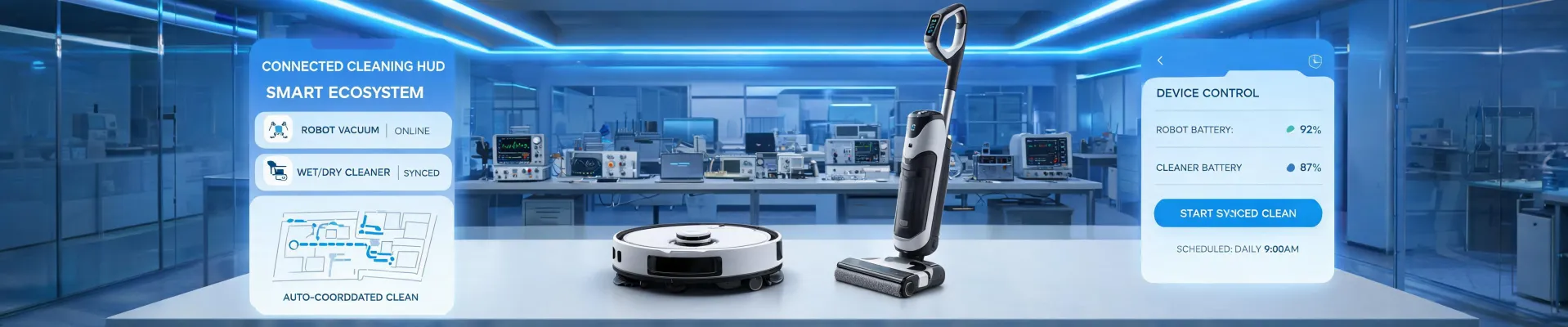
It started at 9:41 p.m. on a Tuesday in November 2024. I was on my hands and knees in the living room, cleaning up dog hair and crushed crackers, when my Tineco S5 vacuum just stopped. No dramatic sound. No warning except the tiny red filter light blinking like it had been trying to tell me something for weeks. Honestly, it had.
I'm not a repair tech. I'm just the person who ends up responsible for every appliance in our house, plus two short-term rental units we manage. I want to say I knew what that red light meant. I didn't. I had a vague memory of the manual mentioning something about filter care. The app had even sent me reminders. I swiped them away. (I really should stop doing that.)
The Backstory: Why I Bought a Tineco S5 Vacuum in the First Place
To understand why that red light made me so annoyed, you need to know how I ended up with a Tineco. I didn't buy it because I was a brand loyalist. I bought it because I was tired of cheap vacuums dying in my hands.
In 2020 I paid $89 for a stick vacuum. In 2021 the battery died. The replacement battery cost $42, and the motor felt so weak afterward that the whole thing went into the garage. In 2022 I bought another budget vacuum for $110. It lasted eight months before the roller brush stopped spinning and the suction dropped to basically nothing.
So when it came time to replace that one, I stopped looking at price tags and started looking at cost per year. The Tineco S5 vacuum wasn't the cheapest option. But the way I did the math, if it lasted three years, it would cost less per year than the two cheap ones combined. That was the real reason I pressed 'order.'
The Night the Suction Stopped
Last November, the Tineco S5 vacuum had been running for about fourteen months without a single problem. I'd emptied the dirty water tank. I'd cleaned the roller. But I'd never once checked the filter. Actually, that's not true. I checked it once in the spring, saw it was 'fine,' and figured that was enough for the year.
I knew I should check the filter every few weeks. But I thought, 'what are the odds?' The odds caught up with me.
When the red light came on, I searched 'tineco filter replacement' from my phone while sitting on the floor. The search results were surprisingly clear. The pre-filter should be rinsed, dried fully, then slid back in. The HEPA filter should be replaced every three to six months, maybe more often if you have pets. I have a dog and a child. I should have known better.
I tapped the old filter against the sink. A gray cloud came out. It was basically a fur-covered brick. The replacement filter I ordered was around $25 plus shipping, as of November 2024. As of January 2025, the same type of filter still seems to land somewhere between $18 and $35, depending on where you buy it. Verify current prices before you order, because stock changes.
And here's the part that still makes me laugh. I tried to save time by putting the washed pre-filter back in while it was still damp. It worked for about ten seconds. Then the red light came back and the vacuum shut off again. The sensor meant business. I had to wait almost two full days for the filter to dry completely. That $25 filter became a $25 lesson in patience.
Then the KitchenAid Dishwasher Went on Strike
The Tineco filter was still drying when the dishwasher started making noise. Not a 'we are cleaning dishes' noise. A 'something is stuck in a spinning thing' noise. I searched 'kitchenaid dishwasher troubleshooting' and found the usual suspects: clogged filter, jammed chopper blade, or a stuck drain impeller. In my case, it was the filter assembly under the lower spray arm. There was a small piece of a plastic lid stuck in the food chopper area, and the filter was coated with a film I definitely should have noticed earlier.
The fix was simple: pull the lower rack, remove the spray arm, twist the filter cover about a quarter turn, clean everything out, and reset the dishwasher by turning off the breaker for 60 seconds. It worked. Cost: $0. Time: about 25 minutes.
Spoiler: the dishwasher problem wasn't caused by cheap dishwasher tablets. It was caused by me never looking at the filter because I assumed it 'probably doesn't need checking.' Sound familiar?
The Hooded Hair Dryer Conversation
While I was under the sink being smug about my $0 dishwasher repair, my wife was looking at hair dryers. She wanted to buy her mom a hooded hair dryer for Christmas and asked if I had any thoughts. She typed 'best hooded hair dryer' into the search bar, and I said, 'Just get the one that won't quit.' Then I tried to explain what I meant before I sounded like a rich guy.
The reason I said that is because I once bought the cheapest hooded dryer on the internet. It wasn't dangerously bad at first. It just stopped working when it mattered most. The heat switched back and forth between warm and slightly less warm. The timer felt like a suggestion. By the third or fourth use, the fan made a grinding sound, and we returned it. The replacement cost more, but it wasn't the most expensive one. It had a mechanical timer, a fan speed that wasn't fake, and a warranty that existed on paper. We've had it for eleven months with no issues.
That's the thing about 'best.' It doesn't always mean 'most expensive.' It means 'works when you need it, lasts longer than the return window, and doesn't leave you hoping the second one is different.'
The Slow Cooker Liner Question
And then, because the internet is a strange place, my wife asked, 'are slow cooker liners safe?' She'd seen a box in her sister's kitchen and wasn't sure if using a plastic liner inside a slow cooker was a hygiene nightmare or a normal thing.
Short answer: yes, if you use a food-grade liner according to the package instructions. The FDA considers these food-contact materials, and they're common in kitchens where people don't want to spend forty minutes scrubbing dried chili off the sides of a crock. The main rules are: don't let the liner touch the heating element, don't use it in the oven or microwave unless the package says it's safe, and don't leave the slow cooker on 'warm' all day and pretend that makes old food safe.
The slow cooker liner conversation wasn't really about liners, though. It was about the phrase 'is it worth the money?' A box of liners costs a few dollars. One liner costs maybe twenty cents. If using a liner saves you from a burned-on cleanup or keeps your elderly mother from risking a fall while scrubbing a heavy ceramic pot, that's a pretty cheap insurance policy.
What I Actually Believe Now
It took me about four years and maybe $1,100 in failed household purchases to understand that 'value' doesn't mean 'expensive.' It means total cost divided by how long it works, plus your time, plus the cost of the moment it breaks when you least expect it.
So now we have a checklist on the inside of the pantry door. It has a coffee ring on it, and it's not pretty. But it works:
- Tineco S5 vacuum: rinse and fully dry the pre-filter every two to three weeks, check the HEPA filter every four months.
- Dishwasher: pull the filter once a month, even if the dishes 'look fine.'
- Hooded dryer: buy the one you trust, not the one that's simply cheap enough to be tempting.
- Slow cooker liners: read the package, follow the temperature limit, and stop judging people who use them.
- When something breaks, search the manual before you search for a replacement part.
If you've ever been stopped mid-clean by a blinking red light, you know that weird mix of frustration and guilt. The machine was trying to tell me something, and I didn't want to listen. Now I do.
Trust me on this one: the filter you replace before it fails is still cheaper than the problem you create after it fails.

Greta Lindholm
Greta Lindholm is a household refrigeration analyst covering French-door, side-by-side, top- and bottom-mount refrigerators, mini fridges, beverage coolers, chest freezers, and upright freezers. She applies IEC 62552 and IEC 60335-2-24 while comparing energy consumption, usable volume, pull-down time, compartment temperature stability, freezing capacity, noise, door-seal leakage, refrigerant charge, and ambient-temperature performance. Her guides help importers, distributors, private-label teams, and appliance engineers select platforms around climate class, storage mix, efficiency labels, cabinet dimensions, service access, shipping density, and warranty exposure.