No fluff: this is a Tineco Go Hammerhead review, and it's also the kind of Tineco Floor One S5 smart wet/dry vacuum reviews that actually helps you choose. I'm a quality/brand compliance manager at an appliance distribution company. I review roughly 200 pre-production units a year, and I've rejected about 12% of first deliveries in 2025 because of things like filter seal failures and sensor calibration drift. I do this for a living, so I look at a product the way I'd check a supplier's first article: specs, sealing, maintenance, and what happens in month three.
I've spent the last month using both machines on the same hard floors, the same staircases, and the same messy car interiors. Here's the short version before I get into the details: they solve different problems. The Floor One S5 is a whole-floor maintenance tool. The Go Hammerhead is a grab-it-when-you-need-it spot cleaner. The real comparison isn't 'which is better.' It's 'which mess shows up in your life more often?'
What I'm comparing and why
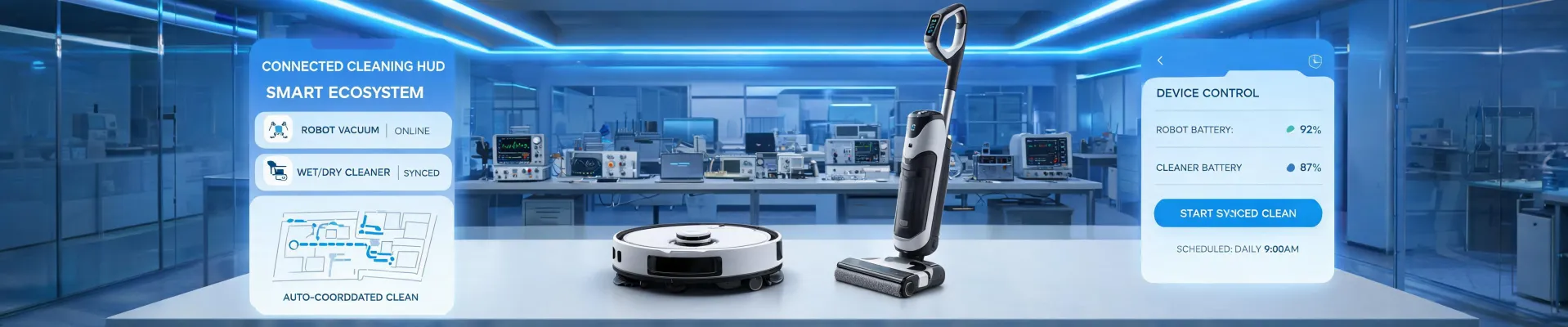
People assume these two wet-dry vacuums are fighting for the same money. They aren't. The Tineco Floor One S5 is a full-size smart wet/dry vacuum designed to vacuum and mop hard floors in one pass. It has the iLoop sensor, edge-to-edge brush coverage, a clean-water tank, a dirty-water tank, and a self-cleaning brush roll.
The Go Hammerhead is a compact portable wet-dry vacuum. It's built for messes that are not on the open floor: car seats, carpeted stairs, pet beds, garage spills, bathroom corners. It's smaller, lighter, and easier to stash in a closet or even a car trunk.
So I'm comparing them on three dimensions: cleaning coverage, drying and maintenance, and total cost of ownership. Those are the things that matter after the first-week honeymoon feeling wears off.
Cleaning coverage: square footage versus spots
On hard floors, the Floor One S5 is the stronger machine. The iLoop sensor detects wet or sticky spots and automatically boosts suction and water flow. The brush roll reaches closer to baseboards than I expected, and the whole unit pulls itself forward, which sounds like a gimmick until your back remembers every time you mopped a big kitchen by hand.
But the S5 is still a floor-first tool. It does fine on bathroom tiles, but it's not the thing I want for cleaning a car seat or a fabric stair runner.
That's where the Go Hammerhead earns its place. It's quick to grab, easy to point at an upholstery spill, and genuinely better on small, awkward messes. What surprised me? It handled a wet bathroom floor better than I expected. It's not as powerful on a wide-open spill as the S5, but for a small puddle or a post-shower mess, it does the job without setting up a whole cleaning station.
I want to say the S5's battery runtime is around 35 to 40 minutes on standard mode, but don't quote me on that exact figure. Floor type, suction setting, and water use move it around too much. The Go Hammerhead's runtime is shorter, which is fine because you're not using it to clean an entire house in one pass.
Conclusion: Floor One S5 wins on floors. Go Hammerhead wins everywhere else. If you're only going to own one, the tie-breaker is whether you clean square footage or you clean specific spots.
Drying and maintenance: the part nobody reads
Here's something vendors won't tell you: 'self-cleaning' doesn't mean the whole machine cleans itself. On the Floor One S5, self-cleaning mode washes the brush roll and the internal pipe that leads to the dirty-water tank. You still have to empty the dirty tank, rinse the filter, and wipe down the brush housing. I've seen reviewers skip that part, and then they complain about smell two weeks later.
That said, the S5's FlashDry mode is real. The brush roll comes out noticeably drier than any other floor washer I've tested at this price point. It doesn't solve every maintenance issue, but it solves the biggest one: the gross damp brush roll.
The Go Hammerhead is simpler. There are fewer parts, less plumbing, and less to break. But because the brush head doesn't dry automatically, you have to pull it apart and let it air dry. If you forget, you get that musty smell. The fix is easy, but it requires a habit.
Conclusion: For daily whole-floor use, the S5's self-cleaning and drying features win. For occasional spot use, the Hammerhead's simpler construction is less to go wrong.
Total cost: energy, filters, and the hidden line items
People ask me about operating cost all the time. When someone searches 'electric clothes dryer kWh per load,' that's a meaningful number because dryers are energy hogs. According to Energy Star typical-use figures (accessed January 2025), a vented electric clothes dryer can use roughly 1.8 to 5.0 kWh per load depending on the cycle, with heat-pump models landing at the lower end of that range.
A floor washer doesn't register on that scale. Its battery charge is a tiny fraction of a kilowatt-hour, so electricity isn't where your money leaks out. Your money leaks out in filters, brushes, and time.
I've seen people save $20 on a cheap filter, then watch it swell or tear after a month. Now they're back to hand-mopping the floor while they wait for the replacement. That's the classic penny-wise mistake. The washable filter on a Tineco is not that expensive, and replacing it when the shape changes is part of the real cost of ownership.
One more quality-check lesson: I keep a Braun Multimix 5 hand mixer HM5100 in the lab as a reminder that wattage isn't durability. The HM5100 isn't the highest-wattage mixer on the shelf, but its gearbox holds up better than cheap ones I've tested. Same principle applies to Tineco: a big suction number doesn't matter if the brush roll can't reach the edge, the tank seals leak over time, or the sensors are inconsistent.
Conclusion: The cheaper Tineco can be the more expensive choice if you buy the wrong type for your messes. Look at the total cost, not the ticket price.
And yes, the smoke alarm chirp
Last week I was testing the Go Hammerhead in a friend's car. He walked into the house, came back a minute later, and asked: 'Why does my smoke alarm chirp?'
I gave him the same checklist I'd give anyone: battery, dust, end-of-life. It turned out to be a low battery in a bedroom smoke alarm. The chirp had nothing to do with the vacuum, but the timing made him think they were connected.
The National Fire Protection Association's smoke alarm guidance (accessed January 2025) still starts with the same three causes. The simple explanation is usually the right one. That's also why, when I find a problem with a Tineco unit, I test the water tank seal and filter seating before I recommend sending the whole thing back. Most issues are fixable without replacing the entire machine.
Which Tineco should you buy?
If you're deciding between the two, here's how I'd call it:
- Choose the Tineco Floor One S5 if you have a lot of hard floor, you want one pass that vacuums and mops, and you'll use it several times a week. It costs more upfront, but it saves hours of manual mopping.
- Choose the Tineco Go Hammerhead if your messes are in spots: car interiors, stairs, upholstery, basement leaks. It's easier to store, easier to grab, and less money leaving your wallet.
- If your budget is tight but your floors are big, don't assume the smaller machine is the money-saving choice. Repeatedly deep-cleaning a whole house with a portable unit will test your patience—and probably your back.
I'm not going to sit here and say 'both are great' because that doesn't help you. For whole-floor maintenance, the Floor One S5 is the better workhorse. For spot cleaning and portability, the Go Hammerhead is more practical. Choose based on your normal week, not the week you wish you were having.

Greta Lindholm
Greta Lindholm is a household refrigeration analyst covering French-door, side-by-side, top- and bottom-mount refrigerators, mini fridges, beverage coolers, chest freezers, and upright freezers. She applies IEC 62552 and IEC 60335-2-24 while comparing energy consumption, usable volume, pull-down time, compartment temperature stability, freezing capacity, noise, door-seal leakage, refrigerant charge, and ambient-temperature performance. Her guides help importers, distributors, private-label teams, and appliance engineers select platforms around climate class, storage mix, efficiency labels, cabinet dimensions, service access, shipping density, and warranty exposure.